

Contact
+86 185 0154 9417
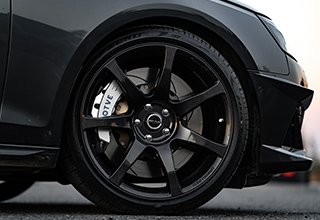
There will be several round protrusions on the brake caliper; the protrusions are the pistons. Multiply the number of protrusions on one side by 2 to calculate the number of pistons. This is the most direct and commonly used method to determine the piston count of a brake caliper, applicable to most passenger cars, performance cars, and aftermarket calipers. The core logic is that caliper pistons are usually arranged symmetrically, with the same number on each side; the total piston count can be derived from the visible protrusions on one side.
From a structural perspective, the piston protrusions on a brake caliper are mostly arranged in a regular pattern, with common specifications such as 2‑piston, 4‑piston, 6‑piston, and 8‑piston. A 2‑piston caliper typically has one round protrusion on each side, symmetrically distributed in an opposed design, commonly found on compact family cars or entry‑level models. A 4‑piston caliper has two protrusions on each side, arranged side by side or one above the other, visually appearing as "dual protrusions" – this design provides more even brake pad force distribution and is common on mid‑size family cars or lightly modified vehicles. For 6‑piston and 8‑piston calipers, the number of protrusions on each side is three and four respectively, with a denser arrangement; these are mostly used on high‑performance sports cars, heavy vehicles, or in depth‑modified setups, where the multi‑piston structure offers stronger braking force and more stable heat dissipation.
It should be noted that some specially designed calipers may have cases where "the number of protrusions on one side does not equal half the actual piston count," requiring further judgment based on the caliper type. For example, some single‑piston floating calipers have only one piston protrusion on one side while the other side is a fixed bracket; in this case, you do not multiply by two – the piston count is simply one. Such calipers are common in the rear brake systems of economy cars. A small number of high‑end aftermarket calipers may use staggered‑diameter pistons; although the number of protrusions still follows the symmetrical principle, the piston sizes differ. However, the protrusion count remains the core basis for identification, and you need not worry about differences in piston size.
Additionally, if the protrusions on the caliper surface are unclear due to dust, oil, or aftermarket painting, clean the caliper surface first before observing. You can also check the vehicle manual, caliper brand and model specifications, or consult a professional mechanic for confirmation. Accurately determining the piston count of a brake caliper not only helps owners understand their vehicle's basic braking system configuration but also provides an important reference for future brake system upgrades, repairs, and maintenance, preventing mismatched components caused by misidentifying the piston count.

MOTVE Braking, Beyond Performance.