


Contact
+86 185 0154 9417
Structural difference: Fixed calipers mainly mean the caliper body is fixed. Floating calipers mean the caliper is floating. The braking principle is different. This core difference directly determines how the two types of calipers work, their performance characteristics, and their suitable applications. Below is a detailed analysis covering principles, structural details, core advantages, and applicable scenarios, to help everyone fully understand the differences and compatibility of the two types.
I. Core principles and structural details
1. Fixed calipers
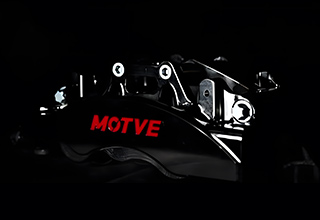
The body of a fixed caliper is rigidly connected to the steering knuckle via a bracket and cannot move laterally. Its braking principle uses pistons symmetrically distributed on both sides of the caliper, which simultaneously push the brake pads inward to clamp the brake disc. Fixed calipers typically have a higher number of pistons (commonly 4, 6, or 8 pistons), and the piston sizes on both sides can be designed as equal or unequal diameters to achieve more uniform pad-to-disc contact and more direct brake force transmission. Structurally, the fixed caliper body surrounds a larger portion of the brake disc and features better-designed heat dissipation channels. Some high-performance models also use a one-piece forging process to improve structural strength and lightweight performance.
2. Floating calipers
The body of a floating caliper is not completely fixed; it is connected to the bracket via guide pins and can slide laterally a small amount along these pins. Its braking principle uses pistons on only one side to push the brake pad against the disc, while the reaction force causes the entire caliper to float, bringing the opposite pad into contact with the disc. Floating calipers have fewer pistons, typically one or two, and the pistons are located only on one side of the caliper. The structure is relatively simple, smaller in size, and lighter in weight. The guide pin design of a floating caliper is critical; smooth sliding must be ensured to avoid uneven pad wear or performance loss due to binding.
II. Comparison of core advantages
1. Advantages of fixed calipers
- Strong and stable braking force: The multi-piston symmetrical layout provides more even clamping force, uniform disc loading, and reduced heat fade. Performance is particularly stable under high-intensity braking scenarios such as track driving or long downhill stretches.
- Excellent heat dissipation: The one-piece caliper body combined with multiple cooling fins quickly dissipates heat generated by braking, lowering the risk of brake fluid boiling and extending system life.
- High modification potential: Supports advanced configurations such as staggered-diameter pistons and ceramic pistons, allowing personalized upgrades based on vehicle power levels and driving needs. They are the first choice for performance cars and modified vehicles.
2. Advantages of floating calipers
- Simple and reliable structure: Fewer components, simpler assembly, low failure rate, no complex maintenance required in daily use, and lower repair costs.
- Lightweight and good space compatibility: Small size and light weight, with lower demands on wheel hub space. They fit most factory wheels on passenger cars, add little unsprung mass, and have minimal impact on fuel economy.
- Smooth braking feel: The floating design automatically compensates for brake pad wear, reducing noise and vibration during braking and enhancing daily driving comfort.
III. Which is better? The right choice depends on your needs.
There is no absolute "better" caliper type; the choice depends on vehicle usage, driving scenarios, and personal needs:
- If you are a daily commuter primarily driving in the city, a floating caliper is the more practical choice. Its reliable performance, low maintenance cost, and compatibility meet all daily braking needs.
- If you pursue extreme performance, frequently participate in track days or aggressive mountain driving, or have a modified engine, a fixed caliper is more suitable. Its strong braking force, stable heat dissipation, and modification potential can handle high-intensity braking scenarios and ensure driving safety.
- From a cost-performance perspective, floating calipers have an advantage in daily use. From a performance ceiling perspective, fixed calipers stand out. The two are designed for different purposes and suit different scenarios.
IV. Additional considerations
Regardless of whether you use floating or fixed calipers, their performance depends on high-quality brake pads, discs, and fluid. In daily use, regularly inspect the braking system for wear and replace aging components in a timely manner. Moreover, when upgrading calipers, choose products that match your vehicle's wheel size and brake master cylinder to avoid reduced braking performance or safety hazards due to improper fitment.

MOTVE Braking, Beyond Performance.